A gymnast lands her last jump, sticks it, and before the judges have even reached for their cards the crowd is already using the word: perfect. A perfect ten allows no deduction at all — not one wobble, not one step. That is the strictest claim any adjective makes, and ordinary English borrows it for three different jobs. Sometimes perfect means nothing is wrong with a thing. Sometimes it means a thing fits its job exactly. And sometimes it simply means complete, as when a total stranger is called a perfect stranger.
The closest synonyms of perfect are flawless, impeccable, ideal and tailor-made. Flawless says no fault can be found in it. Impeccable is the formal word for behaviour and records that nobody can criticise. Ideal describes the best state you can imagine, the model everything is measured against. Tailor-made is made for one exact person or purpose, like a suit cut for a single body.
Quick list: flawless, impeccable, faultless, immaculate, spotless, ideal, tailor-made, exemplary, textbook, complete, utter, absolute, masterful, polished, consummate, word-perfect
This article covers 16 synonyms of perfect, grouped by the claim the word is making: no faults, an exact fit, completeness, and skill. Each entry gives the meaning, pronunciation, a note on when to choose it, and an example. It also settles the old grammar argument about whether anything can be “more perfect”, and separates perfect from its nearest rival, ideal.
Contents
- Perfect Synonyms in One Table
- Without a Single Fault
- Exactly Right for the Job
- Complete and Total: The Third Sense
- Skill Without a Slip
- Can Anything Be More Perfect?
- Perfect vs. Ideal: Real or Imagined?
- Words That Mean the Opposite: Antonyms of Perfect
- Mistakes Learners Make with Perfect
- Questions People Ask about Perfect
- Nothing Wrong, Nothing Missing
Perfect Synonyms in One Table
| Synonym | Meaning in short | Formal level | Best for |
|---|---|---|---|
| Flawless | Not one fault anywhere | Neutral | Diamonds, plans, performances |
| Impeccable | Beyond criticism | Formal | Manners, taste, records |
| Faultless | Cannot be criticised | Formal-neutral | Language, logic, technique |
| Immaculate | Perfectly clean; faultless | Neutral | Rooms, clothes, records |
| Spotless | Completely clean; unblemished | Neutral | Clothes, driving records |
| Ideal | The best imaginable | Neutral | Conditions, candidates, spots |
| Tailor-made | Made for one exact need | Neutral | Solutions, roles, training |
| Exemplary | A model for others | Formal | Behaviour, service, work |
| Textbook | Exactly as it should be done | Neutral | Examples, cases, rescues |
| Complete | Total; nothing missing | Neutral | Strangers, nonsense, control |
| Utter | Total (before nouns, mostly bad) | Neutral | Chaos, silence, nonsense |
| Absolute | Complete; total | Neutral | Beginners, silence, gems |
| Masterful | Skilled and in control | Formal-neutral | Performances, speeches |
| Polished | Smooth, no rough edges | Neutral | Presentations, performances |
| Consummate | Perfect in skill | Formal | Professionals, artists |
| Word-perfect | Correct in every word | Neutral | Lines, recitations, answers |
Without a Single Fault
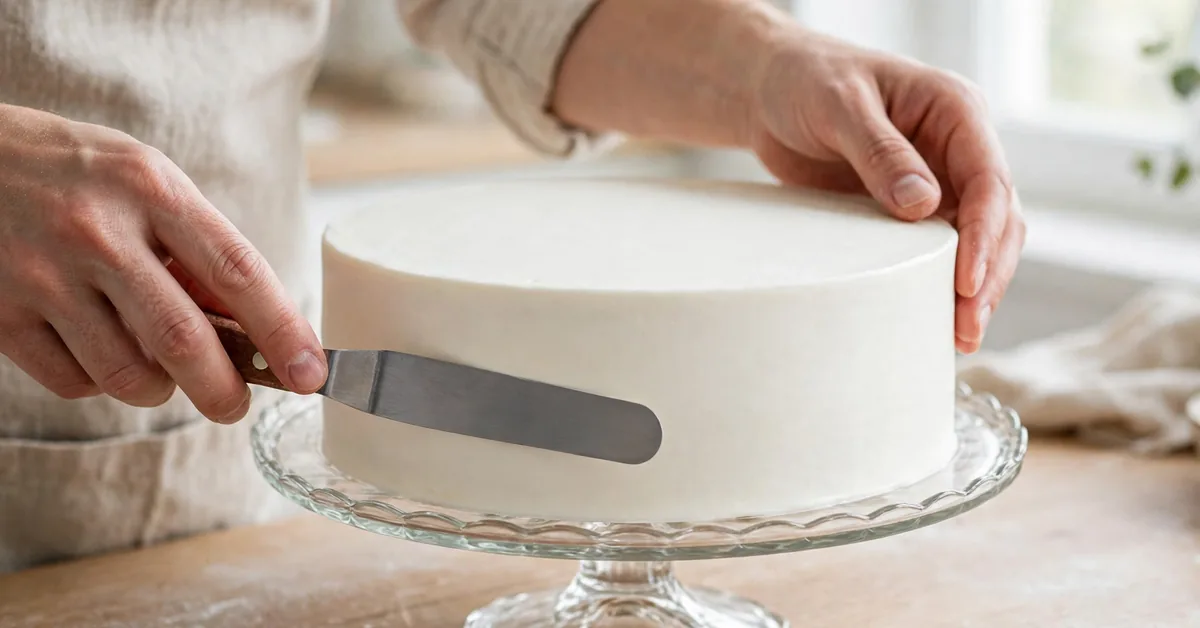
The first and strictest family: these five words claim that a search for faults would find nothing.
1. Flawless
IPA: /ˈflɔːləs/
Definition: Without any fault or mistake; perfect in every part.
Usage: The general-purpose word of this group — diamonds, skin, plans and performances all take it. If you mean “no fault anywhere” and nothing more specific, this is the one.
Example: The jeweller turned the diamond under his lamp for a full minute before calling it flawless.
2. Impeccable
IPA: /ɪmˈpekəbəl/
Definition: Perfect, with no faults; impossible to criticise.
Usage: The formal member of the family, and it lives on conduct: impeccable manners, impeccable taste, an impeccable record. It judges how someone behaves or presents, not how a stone is cut.
Example: The hotel staff were impeccable — polite, quick and never in the way.
3. Faultless
IPA: /ˈfɔːltləs/
Definition: Without any fault; not able to be criticised.
Usage: The closest twin of flawless, a shade more written than spoken. Its classic partners are skills and systems: faultless English, faultless logic, a faultless technique.
Example: After two years in Lyon she spoke faultless French, down to the last accent.
4. Immaculate
IPA: /ɪˈmækjələt/
Definition: Perfectly clean and tidy; also without fault or error.
Usage: It starts with cleanliness — an immaculate kitchen, an immaculate uniform — and then steps across to faultlessness: an immaculate record, an immaculate presentation.
Example: He kept an immaculate desk: one notebook, one pen, nothing else.
5. Spotless
IPA: UK /ˈspɒtləs/ · US /ˈspɑːtləs/
Definition: Completely clean, with no marks; (of a record) with nothing bad in it.
Usage: Literal first — a spotless shirt, a spotless floor — then the record sense: a spotless driving record promises years without a single offence.
Example: After ten years behind the wheel, she still had a spotless record.
Exactly Right for the Job
The second family makes a different claim: not “no faults” but “exactly the right one”. A thing can have small faults of its own and still be the perfect fit for its purpose.
6. Ideal
IPA: /aɪˈdɪəl/
Definition: The best possible; exactly as something should be.
Usage: The imagined standard against which real things are measured: ideal conditions, an ideal candidate, the ideal temperature. The comparison section below separates it from perfect itself.
Example: A shady tree beside the river was the ideal spot for a picnic.
7. Tailor-made
IPA: /ˌteɪləˈmeɪd/
Definition: Made or chosen exactly for a particular person, job or need.
Usage: Borrowed from the tailor’s shop and now mostly figurative: a tailor-made solution, a tailor-made role. It promises the fit was made on purpose, not found by luck.
Example: The course was tailor-made for beginners who could only practise at weekends.
8. Exemplary
IPA: /ɪɡˈzempləri/
Definition: So good that it can serve as an example for others to follow.
Usage: Formal praise with a teaching job inside it: exemplary behaviour, exemplary service. It does not just approve of the thing — it holds the thing up in front of everyone else.
Example: The nurse’s exemplary care was mentioned by every patient on the ward.
9. Textbook
IPA: /ˈtekstbʊk/
Definition: Exactly as a thing should be done, following all the rules.
Usage: It lives in fixed partnerships — a textbook example, a textbook case, a textbook performance. Because the book is predictable, it can faintly suggest “no surprises”; usually that is praise, occasionally not.
Example: It was a textbook rescue: calm, quick and by the book from start to finish.
Complete and Total: The Third Sense
Perfect has a quieter third job where it says nothing about quality at all: a perfect stranger is a complete stranger, and perfect nonsense is total nonsense. These three words do that intensifying work, and they are kept short because their claim is simple.
10. Complete
IPA: /kəmˈpliːt/
Definition: Total; with nothing missing.
Usage: In this sense complete stands before people and situations: a complete stranger, complete nonsense, complete control. Judged as quality it means something else — a complete set has every piece, good or bad.
Example: I had never seen the man before in my life; he was a complete stranger.
11. Utter
IPA: UK /ˈʌtə/ · US /ˈʌtər/
Definition: Complete and total; used only before a noun.
Usage: Utter chooses extreme partners, and most of them are bad: utter chaos, utter nonsense, utter silence. It cannot follow the noun, and nobody says a person is “very utter”.
Example: The announcement was greeted with utter silence from the back of the hall.
12. Absolute
IPA: /ˈæbsəluːt/
Definition: Complete; total; not limited in any way.
Usage: Wider than utter because it also praises: an absolute beginner, absolute silence — and, in speech, an absolute gem, an absolute delight. Its partners decide whether it complains or applauds.
Example: She arrived at the chess club an absolute beginner and left it two years later as its champion.
Skill Without a Slip
The last family is about performance: work done so skilfully that no slip shows. The faultlessness here belongs to the doing, not the thing.
13. Masterful
IPA: UK /ˈmɑːstəfəl/ · US /ˈmæstərfəl/
Definition: Done with great skill and control.
Usage: For performances and for handling difficult moments: a masterful speech, a masterful display. It praises the control behind the result as much as the result itself.
Example: His masterful handling of the angry crowd calmed the whole meeting within minutes.
14. Polished
IPA: UK /ˈpɒlɪʃt/ · US /ˈpɑːlɪʃt/
Definition: Smooth and refined, with the rough edges removed.
Usage: Presentations, performances and writing: a polished performance, a polished speaker. The picture is of something rubbed smooth — the skill shows as an absence of bumps.
Example: After six rehearsals the choir gave a polished performance of the anthem.
15. Consummate
IPA: /kənˈsʌmət/
Definition: Perfect in skill; complete and expert.
Usage: Formal, and its partners are people and their gifts: a consummate professional, a consummate liar, a consummate artist. It describes a level of skill reached, not a single clean object.
Example: She is a consummate professional — ready with an answer before the question is finished.
16. Word-perfect
IPA: UK /ˌwɜːd ˈpɜːfɪkt/ · US /ˌwɜːrd ˈpɜːrfɪkt/
Definition: Correct in every single word, without one mistake.
Usage: The specialist of this family, kept for learned and recited text: actors, students and speakers are word-perfect in their lines. American English often uses its twin, letter-perfect.
Example: By the morning of the play, the children were word-perfect in every scene.

Can Anything Be More Perfect?
Perfect belongs to a small club of absolute adjectives — unique, dead, empty, complete — that name the end of a scale. A scale that has ended cannot go further, which is why careful writers traditionally reject “more perfect” and “most perfect”: a thing is flawless or it is not, and there is no rung above the top one.
Then there is the famous exception. The Constitution of the United States opens with the aim “to form a more perfect Union” — and readers have defended the phrase for over two hundred years. The defence is that it means more nearly perfect: closer to the ideal, not beyond flawless. A union, a plan or a performance can always move nearer to perfection without claiming to have passed it.
The practical rule is simple. In conversation, nobody will stop you. In exams and edited writing, stay off the comparison and use the honest neighbours instead: nearly perfect, almost perfect, as perfect as it gets. One related word is always safe, though: the adverb perfectly compares nothing and offends no rule — perfectly clear, perfectly honest, perfectly still.
Perfect vs. Ideal: Real or Imagined?
These two are swapped so freely that learners treat them as one word. There is a line between them, and it is the line between the real and the imagined.
Perfect is said about something that exists and has been judged: the perfect candidate sat in front of the panel, answered everything, and showed no weakness anyone could find. Ideal is the picture in the mind before the judging starts: the ideal candidate would speak four languages and have ten years of experience — whether such a person exists is another question.
A quick test settles most sentences. If you can point at the thing, perfect is available. If you are describing a wish list, the word is ideal. The two overlap honestly in one place — conditions. “Perfect weather” reports the day outside your window; “ideal weather for drying the washing” names the conditions a job needs, whether or not today is providing them.
Words That Mean the Opposite: Antonyms of Perfect
For the fault claim: flawed, faulty, defective, imperfect. A flawed argument has a crack in it; a faulty switch has a part that fails; defective is the manufacturer’s word for goods that left the factory wrong.
For the fit claim: unsuitable, ill-suited, wrong. The wrong tool for a job may be a fine tool — it simply does not fit this purpose.
For the completeness claim: incomplete, partial. A partial answer covers some of the ground; an incomplete one stops before the end.
Mistakes Learners Make with Perfect
Stressing the adjective like the verb. The adjective is PER-fect, /ˈpɜːfɪkt/ — the weight falls on the first syllable. The word stressed on the second syllable, per-FECT, is the verb: to perfect a technique, to perfect your English. Same spelling, two words, and the stress tells the listener which one arrived.
Writing “most perfect” in exams. The middle section above gives the whole argument; the exam version is short. Markers treat perfect as absolute, so write nearly perfect or almost perfect and keep the mark.
Reading “present perfect” as praise. The grammar name describes time, not quality: the present perfect (I have finished, she has left) talks about completed actions with a link to now. A teacher who says “use the present perfect here” is asking for a tense, not for flawless English.
Using perfect when you mean very good. Perfect claims zero faults. If the soup was wonderful but a little salty, it was not perfect — it was excellent. When all you mean is strong praise, the words collected in our guide to another word for great say it without making a promise the sentence cannot keep.
Dropping the -ly: “he speaks English perfect”. After a verb, the adverb is perfectly: he speaks English perfectly, the machine works perfectly. Perfect itself stays with nouns.
Questions People Ask about Perfect
What is another word for perfect?
Flawless and impeccable when you mean no faults; ideal when you mean the best imaginable; tailor-made when you mean made to fit exactly.
What is a synonym for perfect in formal writing?
Impeccable, exemplary, faultless and consummate carry formal weight. Immaculate and masterful sit one step lower, safe in reports and references.
Can you say “more perfect”?
People do, and a famous constitution does. Careful writers avoid it, because perfect already names the top of its scale; nearly perfect and almost perfect say the honest thing.
What is the difference between perfect and ideal?
Perfect describes something real that has been judged faultless. Ideal describes the model in the mind, which reality is measured against and may never match.
How do you pronounce perfect?
The adjective is PER-fect, /ˈpɜːfɪkt/, with the stress on the first syllable. The verb — to perfect a skill — is per-FECT, /pəˈfekt/, stressed on the second.
What is the opposite of perfect?
Imperfect and flawed for faults; faulty and defective for things that do not work; unsuitable when the failure is one of fit.
Nothing Wrong, Nothing Missing
Perfect is three promises wearing one coat: nothing wrong with it, exactly right for its job, and nothing missing. Choose the word that makes only the promise you mean — flawless or impeccable for the faultless claim, tailor-made for the fit, ideal for the picture in your head — and keep perfect itself for the rare moments when all three hold at once. Those moments are scarce, which is why the word still stops a stadium when the judges hold it up.

Rana Fareed writes about words — their meanings, synonyms, and the small differences between them — so learners can choose the right word with confidence.