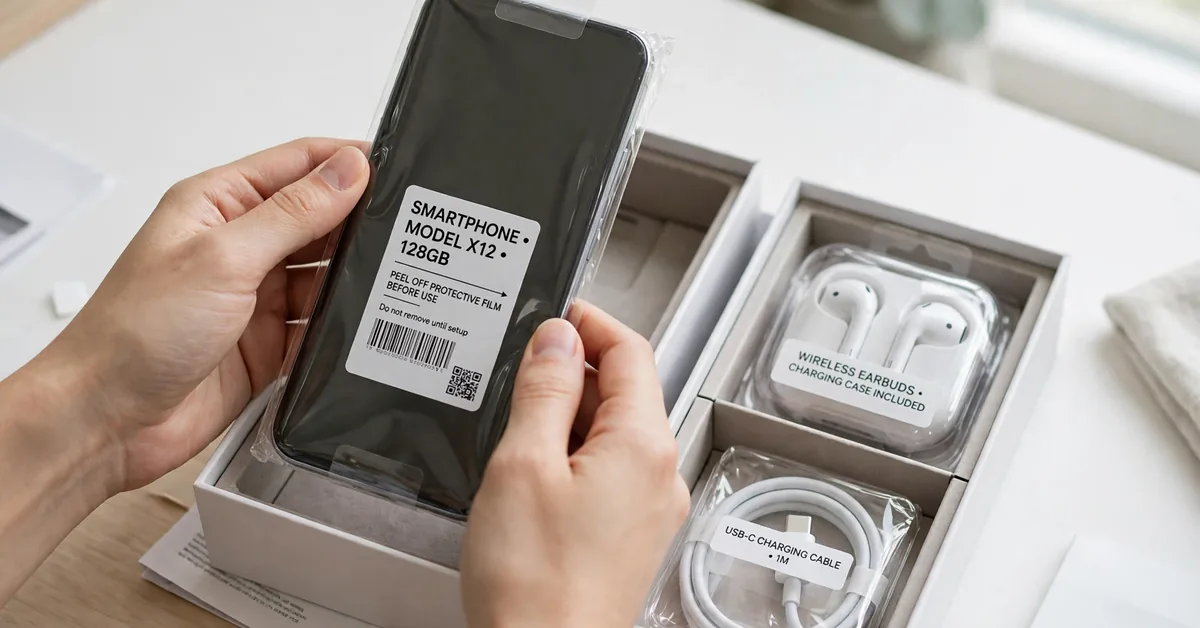
A phone still sealed in its film is new. A manager who started on Monday is new. An idea nobody has ever tried is new. A street you have never walked down is new. Four different facts, one three-letter word — each with its own better replacement.
Start from the sense, not the spelling. For a thing nobody has used, the closest synonym is brand-new. For the most recent of a series, use latest. For something that has never existed before, the word is novel. And when it is only new to you, unfamiliar says exactly that.
Quick list: brand-new, unused, pristine, mint, latest, recent, current, fresh, up-to-date, novel, original, innovative, groundbreaking, unprecedented, cutting-edge, newfangled, unfamiliar, untried, untested
This article covers 19 synonyms of new, grouped by its four senses: never used, recent in time, never seen before, and new to a particular person. Each entry gives the meaning, pronunciation, a note on when to choose it, and an example.
Contents
- New Synonyms in One Table
- Fresh Out of the Box: Never Used
- Just Arrived: The Recent Sense
- Never Seen Before: Ideas, Inventions and Firsts
- New to You: Not Yet Known or Tried
- Which New Do You Mean? Three Questions
- New vs. Brand-New vs. Novel
- Words That Mean the Opposite: Antonyms of New
- Mistakes Learners Make with New
- Questions People Ask about New
- The Takeaway: Name the Sense
New Synonyms in One Table
| Synonym | Which sense of new? | Formal level | Best for |
|---|---|---|---|
| Brand-new | Never used | Neutral | Purchases, gifts, equipment |
| Unused | Never used | Neutral | Tickets, rooms, supplies |
| Pristine | Condition like new | Formal-neutral | Second-hand items, collections |
| Mint | Condition like new | Neutral | Stamps, coins, comics, cards |
| Latest | Most recent | Neutral | News, models, editions, episodes |
| Recent | A short time ago | Neutral | Events, photos, changes |
| Current | In use now | Formal-neutral | Issues, job holders, timetables |
| Fresh | Newly made or arrived | Neutral | Food, evidence, starts, ideas |
| Up-to-date | Fully updated | Formal-neutral | Records, maps, software, knowledge |
| Novel | Never seen before | Formal-neutral | Ideas, methods, solutions |
| Original | First of its kind | Neutral | Ideas, designs, works |
| Innovative | New in method | Formal-neutral | Products, teaching, business |
| Groundbreaking | Changes the field | Formal | Research, discoveries, works |
| Unprecedented | Never happened before | Formal | Events, amounts, demand |
| Cutting-edge | Most advanced | Neutral | Technology, research |
| Newfangled | New (disapproving) | Informal | Gadgets, systems someone distrusts |
| Unfamiliar | New to a person | Neutral | Places, faces, voices, tasks |
| Untried | Not yet tried | Neutral | Methods, recipes, new leaders |
| Untested | Not yet tested | Formal-neutral | Software, theories, designs |
Fresh Out of the Box: Never Used
These four describe condition: the thing has no owner history yet. Three even work for old objects, as long as they look untouched.
1. Brand-new
IPA: US /ˌbrænd ˈnuː/ · UK /ˌbrænd ˈnjuː/
Definition: Completely new; never used or owned by anyone before.
Usage: The strongest form of new for things you buy, promising that nobody has touched it. Mostly spoken; the hyphen appears before a noun.
Example: He rode home on a brand-new bicycle, the tag still hanging from the handlebars.
2. Unused
IPA: /ʌnˈjuːzd/
Definition: Never used; still waiting for its first use.
Usage: The practical word for tickets, rooms and supplies. It says nothing about age: an unused ticket from last spring is months old and still unused.
Example: Two unused tickets sat in her drawer long after the concert.
3. Pristine
IPA: /ˈprɪstiːn/
Definition: In perfect condition, as clean and complete as when new.
Usage: For second-hand things that look untouched; sellers and collectors love it. It praises condition, not age — most pristine objects are old ones, well cared for.
Example: She sold her pristine first-edition novels to a collector in Chicago.
4. Mint
IPA: /mɪnt/
Definition: (Of a collectible) in perfect condition, exactly as it was made.
Usage: Almost always in the phrase “in mint condition,” at home with stamps, coins, cards and comics. A mint item is usually decades old; flawless is the whole point.
Example: A mint copy of the 1962 comic sold for more than the car parked outside.
Just Arrived: The Recent Sense
These five place something in time: it appeared, was released or was updated not long ago.
5. Latest
IPA: /ˈleɪtɪst/
Definition: The most recent of a series; the newest one available now.
Usage: For news, models, editions and episodes — anything released in versions. It carries a promise: nothing newer exists yet.
Example: Have you read the latest report from the weather service?
6. Recent
IPA: /ˈriːsənt/
Definition: Happening or made a short time ago.
Usage: The neutral, safe choice for time: recent weeks, a recent photograph. It is weaker than latest — recent things form a group, while latest singles out the newest one.
Example: Recent rains have filled the reservoir for the first time in years.
7. Current
IPA: US /ˈkɜːrənt/ · UK /ˈkʌrənt/
Definition: Belonging to the present time; in use or in position now.
Usage: The current issue, the current manager: whoever holds the place today. Slightly formal; also a noun for moving water or air.
Example: Under the current timetable, the first bus leaves at five thirty.
8. Fresh
IPA: /freʃ/
Definition: Newly made, arrived or produced; not yet old or stale.
Usage: Fresh bread, fresh evidence, a fresh start. It adds life: fresh ideas sound energetic, while new ideas sound merely recent.
Example: Detectives found fresh footprints in the mud behind the warehouse.
9. Up-to-date
IPA: /ˌʌp tə ˈdeɪt/
Definition: Including the newest information or changes; fully updated.
Usage: For records, lists, software and knowledge — things that fall behind if nobody maintains them. It keeps its hyphens before a noun: an up-to-date map.
Example: Keep your address up to date so the letters reach the new house.
Never Seen Before: Ideas, Inventions and Firsts
These seven are about existence, not condition or date: before this idea, method or event, there was nothing like it.
10. Novel
IPA: US /ˈnɑːvəl/ · UK /ˈnɒvəl/
Definition: New and different from anything seen or known before.
Usage: The thinking word of this group: a novel approach, a novel solution. Formal-neutral. Handle with care — as a noun, a novel is a long story book; the questions below untangle the two.
Example: The engineers found a novel way to cool the building without air conditioning.
11. Original
IPA: /əˈrɪdʒənəl/
Definition: The first of its kind; not copied or taken from something else.
Usage: An original idea starts a line, and everything after it is a copy. One warning: “the original plan” means the first plan, not a creative one.
Example: Her original design for the bridge won the national competition.
12. Innovative
IPA: /ˈɪnəveɪtɪv/
Definition: Using new methods or ideas; inventive.
Usage: The business word for new thinking: innovative products, an innovative teacher. It praises the method, where novel only notes the difference.
Example: The school won an award for its innovative reading program.
13. Groundbreaking
IPA: /ˈɡraʊndˌbreɪkɪŋ/
Definition: Introducing important new ideas that change how things are done.
Usage: Strong, and saved for research, discoveries and works that open a field. A groundbreaking study is not merely new — other people will build on it.
Example: Their groundbreaking research changed how doctors treat the disease.
14. Unprecedented
IPA: /ʌnˈpresɪdentɪd/
Definition: Never done, known or experienced before.
Usage: Formal, and it belongs to events and amounts rather than objects: an unprecedented heatwave, unprecedented demand. It measures history, not freshness.
Example: The festival drew an unprecedented crowd of two hundred thousand people.
15. Cutting-edge
IPA: /ˌkʌtɪŋ ˈedʒ/
Definition: At the newest and most advanced stage of development.
Usage: Technology’s favourite: cutting-edge phones, cutting-edge research. It dates fast — last year’s model is this year’s standard.
Example: The laboratory bought cutting-edge equipment for its gene studies.
16. Newfangled
IPA: US /ˌnuːˈfæŋɡəld/ · UK /ˌnjuːˈfæŋɡəld/
Definition: Newly invented or introduced — said with disapproval.
Usage: The grumbling member of the family. People call gadgets and systems newfangled when they do not trust them, so it is never a compliment — use it only when you want that doubt.
Example: He refused the newfangled payment app and paid in cash, as always.
New to You: Not Yet Known or Tried
Sometimes the thing is old and only the person is new. These three keep the newness where it belongs: with the person.
17. Unfamiliar
IPA: US /ˌʌnfəˈmɪliər/ · UK /ˌʌnfəˈmɪliə/
Definition: Not known or experienced before by a particular person.
Usage: The honest word when only you are new to it: an unfamiliar street, an unfamiliar voice. The street may be centuries old; the newness is yours.
Example: She woke in an unfamiliar room and needed a moment to remember the hotel.
18. Untried
IPA: /ʌnˈtraɪd/
Definition: Not yet tested or experienced; never put to use.
Usage: For methods, recipes and people in a new role — an untried captain. It carries a question mark: nobody yet knows whether it works.
Example: The sauce was untried, so she tasted it before the guests arrived.
19. Untested
IPA: /ʌnˈtestɪd/
Definition: Not yet put through tests to check quality, safety or truth.
Usage: The technical cousin of untried: untested software, an untested theory. It points at missing proof, where untried points at missing experience.
Example: The bridge design remained untested until the engineers ran their simulations.

Which New Do You Mean? Three Questions
When a sentence feels vague, ask three questions.
Has anyone used it before? If no, you are in the first family: brand-new, unused, pristine, mint.
Did anything like it exist before? If not, you are in the ideas family: novel, original, innovative — groundbreaking when it changes the field.
Is it only new to you? If the thing is old but your meeting with it is fresh, say so: unfamiliar, untried, untested.
And if none of the three fits, you mean the clock: the most recent one — latest, recent, current, up-to-date. Praise words split by job too; the guide to another word for great sorts excellent, wonderful and huge separately.
New vs. Brand-New vs. Novel
These are the three learners reach for first, and they are not interchangeable.
New is the general word. It covers all four senses and is never wrong: a new car, a new teacher, a new method, a new city. Its weakness is that it does not say which sense you mean.
Brand-new narrows new to condition. It promises the thing has never been used or owned. A brand-new teacher makes no sense; a brand-new car makes perfect sense. It sounds spoken and enthusiastic, so reports usually prefer new or unused.
Novel narrows new to existence. A novel idea has never been thought before; it says nothing about dates or condition. Your novel solution can be written on old paper with an old pen — the thinking is what is new.
One test sorts all three: if you can add “still in its packaging,” choose brand-new. If you can add “nobody has ever thought of this,” choose novel. Otherwise, plain new is probably right.
Words That Mean the Opposite: Antonyms of New
For the never-used sense: used, second-hand, worn. A second-hand car is the true opposite of a brand-new one.
For the recent sense: old, outdated, old-fashioned. Yesterday’s model is outdated today.
For the ideas sense: traditional, conventional, tried-and-tested — the mirror image of untried methods.
For the new-to-you sense: familiar, well-known. The unfamiliar street of your first week is familiar by the second month.
Mistakes Learners Make with New
Calling it “strange” when you mean new to you. “The food here is strange” sounds like a complaint. If you mean you have not met it before, say new or unfamiliar: “The customs were new to me.”
Reaching for renew as an adjective. Renew is a verb: you renew a passport, a subscription or a gym membership. It can never stand before a noun as new does, and a “renewed passport” is about the process, not freshness.
Treating the compounds as synonyms. Newborn, newcomer and newlywed are nouns for people, with new built inside them. A newcomer is a person who has just arrived; you cannot call a phone or a plan “newborn,” however fresh it is.
Writing “more newer.” New compares as newer and newest; adding more is always wrong. For emphasis, write much newer or use brand-new.
Treating news as a plural. News is uncountable: “The news is good,” never “the news are good.” It is also a noun — it names information and can never replace the adjective new.
Questions People Ask about New
What is a synonym for new?
It depends on the sense: brand-new for things nobody has used, latest for the most recent of a series, novel for ideas that have never existed, unfamiliar for things that are only new to you.
What is another word for new when I buy something?
Brand-new is the closest word for purchases, with unused for things still waiting for a first use, and pristine or mint for second-hand items in perfect condition.
What is the difference between new and brand-new?
Brand-new adds a promise: never used, never owned. New is wider and also covers recent arrivals, new ideas and things that are only new to one person.
What is a formal synonym for new?
Novel and innovative for ideas, current for whoever holds the place now, latest for releases, and up-to-date for information and records.
Does novel only mean a book?
No. As a noun, a novel is a long story. As an adjective, novel means new and unlike anything before — a novel method, a novel idea. The sentence tells you which one is meant.
What is the opposite of new?
Old covers most cases. More exactly: used or second-hand for condition, outdated for recent things, conventional for ideas, and familiar for things that were new to you.
The Takeaway: Name the Sense
There is nothing wrong with new itself: short, clear, always available. It only goes vague when it carries all four meanings at once. Before you write it, name the sense: brand-new for the untouched thing, latest for the newest of a series, novel for the idea nobody has had, unfamiliar for the street you have never walked. One small check, and the replacement chooses itself.

Rana Fareed writes about words — their meanings, synonyms, and the small differences between them — so learners can choose the right word with confidence.